
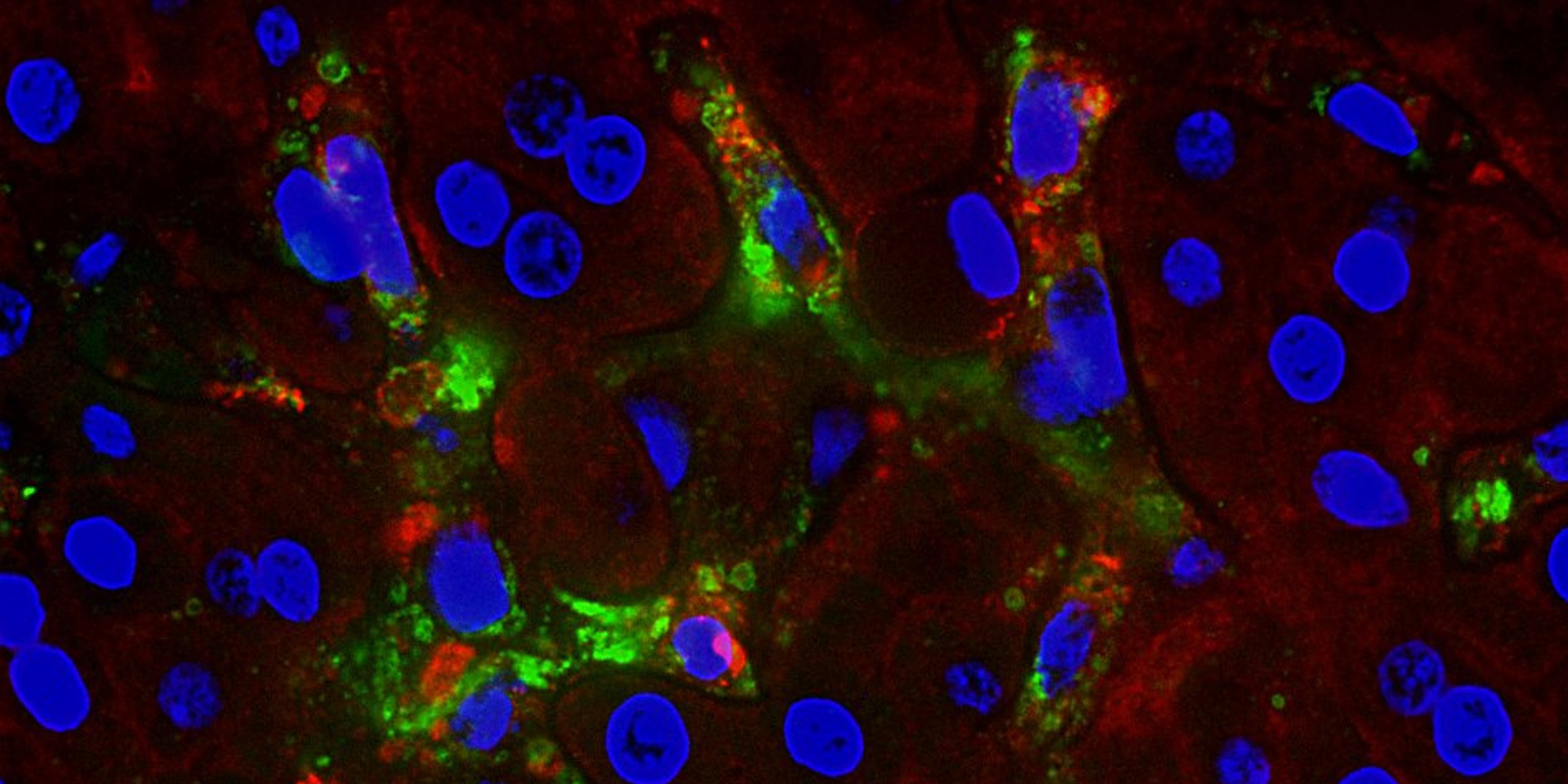
Sodora Lab
Work in the Sodora Lab primarily focuses on two principal areas of HIV research: HIV transmission and HIV-induced disease and immune factors that impact progression to AIDS. Collectively, these research strategies are designed to produce and contribute to novel vaccine approaches and immune therapies that will decrease the spread of HIV and/or prevent disease progression in HIV-infected people.
Our previous studies assessing SIV disease progression in non-human primates have uncovered key insights as to how HIV/SIV infection results in inflammation that fuels disease progression and onset of AIDS. Currently, we focus on immune inflammation and dysfunction that occurs in the liver during HIV/SIV infection as well as during ART treatment. An understanding of the role of virus-infected cells, as well as the liver-associated microbiota, will be important in unraveling the mechanisms driving immune dysfunction in the liver during HIV/SIV infection. These studies also provide insights with regard to the viral reservoirs that are present within the liver during suppressive ART therapy.
In addition, our lab uses the non-human primate model for HIV infection to better understand oral HIV transmission, which predominantly occurs during breastfeeding/chestfeeding. Previously, we determined that following a successful oral infection with SIV, the virus travels to local lymph node before dispersing throughout other lymphoid organs in the body within 1 to 2 days after infection. One current project seeks to expand upon this study through evaluating the differential disease outcomes observed in SIV infected infants by comparing rapid to typical progressing animals. Assessment of humoral immune dysfunction, and more specifically of why the rapid-progressing animals are unable to produce SIV-specific antibodies, will be a key part of this study.
We utilize our knowledge of the oral route of transmission to devise innovative approaches to deliver HIV vaccines via the oral mucosa. This project is a collaboration with the Sather Lab here at Seattle Children's Research Institute. Our focus is on vaccine delivery to the oral mucosa, assessment of the innate immune response following the vaccination and undertaking analyses to identify innate immune responses that are best for anti-HIV antibody production. Findings thus far have demonstrated that the oral mucosa is an effective vaccination site, and ongoing studies are designed to optimize the delivery as well as the anti-SIV humoral immune response to the vaccine.
Partnership Opportunities

Don Sodora, PhD
Don Sodora, PhD, is a professor at the Center for Global Infectious Disease Research. He joined in 2007 to advance the center’s mission in the field of HIV research. Don received his PhD in microbiology from the University of Pennsylvania. He performed postdoctoral research at Stanford University and the Aaron Diamond AIDS Research Center in New York. Sodora has collaborators in Atlanta, Philadelphia, Oregon, Northern Ireland and Cape Town, South Africa. He is dedicated to the training of undergraduate and graduate students, including serving on the Graduate Student Advisory Committee for the Pathobiology Graduate Program at the University of Washington. Outside of the lab, he enjoys spending time with his friends and family, traveling, hiking, taking photographs and camping.
-
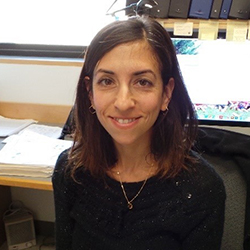
Nina Derby, PhD
Research Scientist IV
Research Interests: HIV/SIV pathogenesis in tissues, especially liver; liver spatial immunology during health and disease; interplay of host, pathogens, and commensal microbiota in disease. Email: nina.derby@seattlechildrens.org. Hometown: Chapel Hill, NC. Education: Smith College, BA; University of Washington, PhD. Interests outside of lab: running, cooking, gardening. Fun Fact: I have three wild and lovely children.
-

Zachariah Fincher
Research Technician I
Research interests: Neuroscience, immunology, microscopy. Email: Zachariah.Fincher@seattlechildrens.org. Hometown: Friday Harbor, WA. Education: University of Washington, BS in Neuroscience and Biochemistry. Interests outside of lab: Yoga, birding, DnD, and board games. Fun fact: I lost my sense of smell for 15 years.
-
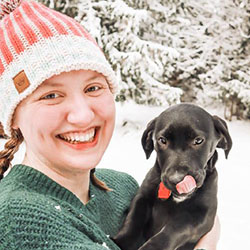
Brooke Johnson
Research Technician I
Research interests: infectious disease and immunology. Email: Brooke.Johnson@seattlechildrens.org. Hometown: Camano Island, WA. Education: Western Washington University, BS in Cellular and Molecular Biology. Interests outside of lab: Hiking kayaking, cycling, watching movies, and playing video games. Fun fact: When I was 15, I totaled a car five days after getting my learner’s permit – oops!
-
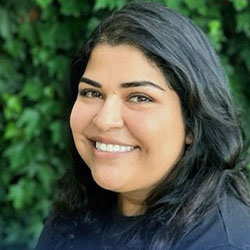
Cris Luevano-Santos
Research Technician II
Research interests: Anything medical with the goal of developing new medicines or medical procedures, and how best to use this research to help those who need it most. Email: Cristina.luevano-santos@seattlechildrens.org. Hometown: Auburn, WA. Education: Saint Martin’s University, BS in Biology. Interests outside of lab: volunteering, my dog Goku, drawing things and painting stuff (I have this belief that I have the innate ability to do anything art related and I have yet to be proven wrong). Fun Fact: I couldn’t speak until I was 5 years old but I became bilingual by age 7.
-
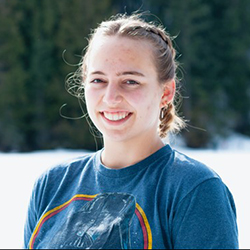
Kim Meyer
Research Technician II
Research interests: vaccine design, adaptive immunity, pathogenesis, host-pathogen interactions. Email: Kimberly.Meyer@seattlechildrens.org. Hometown: Anacortes, WA. Education: Gonzaga University, BS in Biology, Research Concentration. Interests outside of lab: I love to hike, bake, read, take dance classes, and explore Seattle! Fun Fact: I have three extra bones in my mouth! They’re called tori, and I didn’t know they were weird until I was in high school.