

Paquette Lab
Tackling Spontaneous Preterm Birth through a Precision Environmental Health Lens
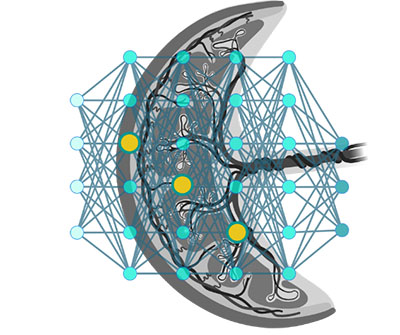 Fetal development is a short period of time that affects health throughout the lifespan. The placenta is a crucial organ that regulates the in-utero environment and alters development. Our lab applies a precision medicine framework to understand the link between environmental exposures, maternal nutrition, and other factors and infant health outcomes. We develop and share computational tools for multi-omics data integration using placental networks.
We are currently applying this approach to identify risk factors for spontaneous preterm birth. Preterm birth is the leading cause of infant morbidity and mortality, and preterm infants require intensive acute and long-term care. More research is needed to understand the underlying risk factors and mechanisms leading to spontaneous preterm birth. We are investigating links between prenatal factors (nutrition, environmental exposures) and spontaneous preterm birth using multi-omics data.
Our long-term goal is to gain insight into the underlying molecular mechanisms linking the in-utero environment to infant and child health outcomes by applying innovative network biology approaches and multi-omic data analyses within the placenta.
Our lab is supported by the NICHD (R00HD09611, PI Paquette), NIEHS (R01ES033785 - Outstanding New Environmental Scientist award, PI Paquette), the Brotman Baty Institute (Catalytic Collaboration Grant) and Seattle Children's Research Institute.
Applying Precision Medicine Approaches to Link the Prenatal Environment to Infant and Child Health
Precision medicine is an innovative approach that tailors disease prevention that incorporates information about genes, environments, and lifestyles. Precision medicine can improve prenatal care because the traditional "one-size fits all" approach to prenatal care cannot capture the complexity of maternal-fetal biology.
We are currently deploying a precision medicine approach through integration of molecular signatures of prenatal exposures and outcomes. Molecular signatures are sets of biomolecular features generated from ‘omics data, including epigenomic, metabolomic or proteomic data that can be used to either gain mechanistic insight or for prediction in the context of clinical phenotypes We have generated placental molecular signatures in relation to a variety of relevant exposures and outcomes, which we are in the process of integrating:
Prenatal exposures
- Phthalates
- Polycyclic aromatic hydrocarbons
- Organophosphate esters
Maternal factors
- Prenatal vitamin D levels
- Maternal stressful events
Perinatal outcomes
- Preterm birth
Building Multi-Omic Networks to Better Understand Placental Biology
As we generate, analyze, and integrate our placental omics datasets, we have used our data to build networks to better understand placental biology. We have made these networks available in the Placental Computational Tools Section of our website. We hope these tools can be useful for other researchers in this space! To date, we have developed two tools:
- Placental Transcriptional Regulatory Network
This tool can help explain relationships between transcription factors and target genes in the placenta. - Comparative Transcriptomic Placental Model Atlas
This tool summarizes relative gene expression in different cell models of the placenta. This can aid researchers in selecting the best model system for their experimental question.