
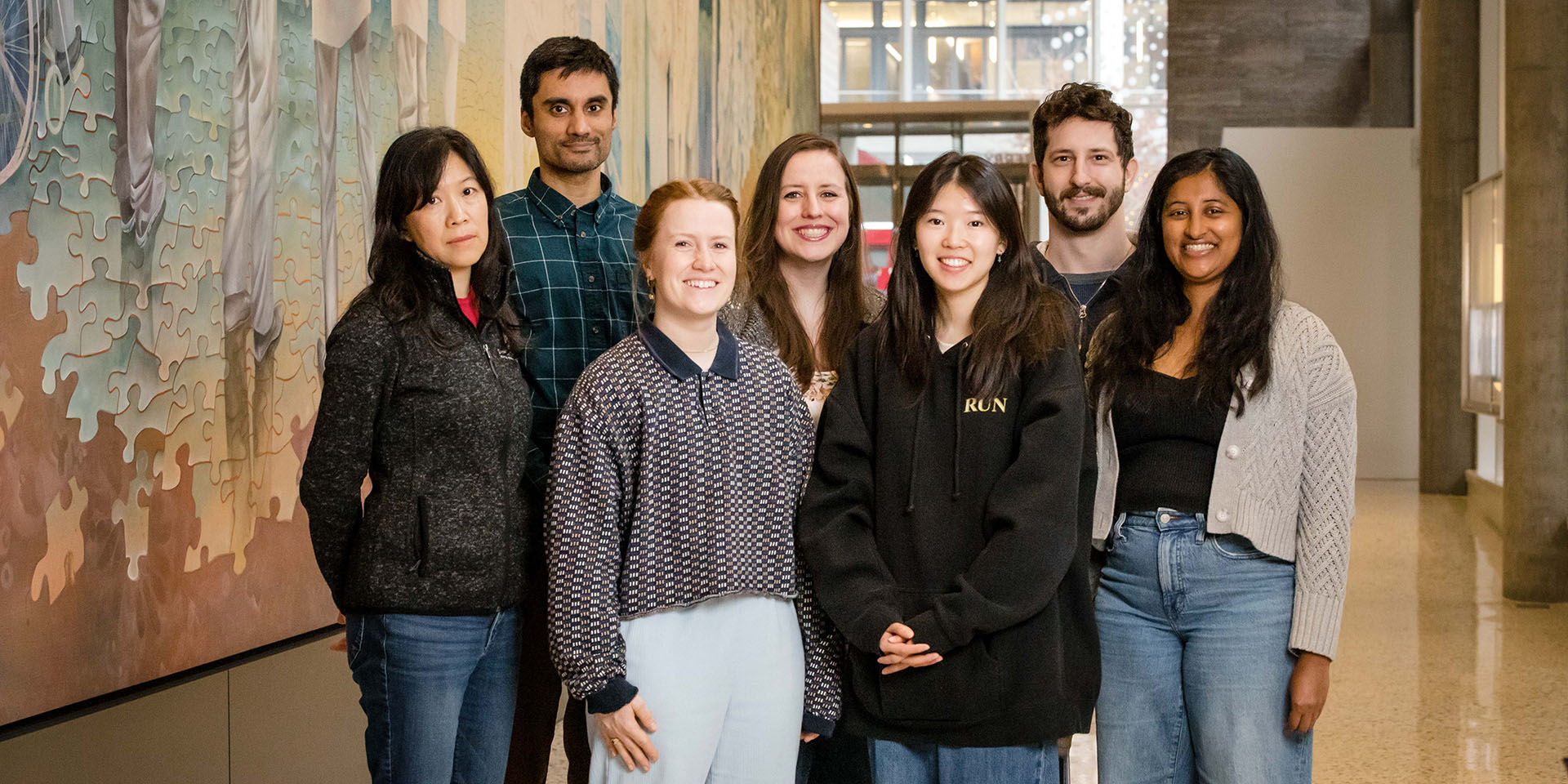
Sarthy Lab
We are exploring the epigenetics of pediatric leukemias and lymphomas to gain insight into how and why these cancers start, in hopes of ultimately finding better treatments. Led by Dr. Jay Sarthy, this work could shed light on why some cancers are resistant to treatment or come back after treatment. The Sarthy Lab is also examining a chemotherapy drug often used in Asia to treat elderly cancer patients to see if it could become a frontline treatment for pediatric cancers. This drug could have fewer side effects than today’s standard treatments.
Reducing Chemotherapy Drug Toxicity
More children than ever are surviving cancer, but many of them live with long-term side effects of treatment including heart problems, infertility, and secondary cancers.
At the Sarthy Lab, we are examining whether a chemotherapy drug called aclarubicin might be effective against pediatric lymphomas and other childhood cancers while resulting in fewer side effects than the current standard of care. This therapy is commonly used in Asia to treat elderly cancer patients. It is often given to people who have heart problems because they are unable to tolerate more toxic chemotherapy drugs. If this therapy proves effective in children, it could be quickly implemented as a new treatment option because it has already been widely used and proven safe in other countries.
Long Read Sequencing
The Sarthy Lab is working to understand if specific epigenetic profiles make certain cancers particularly deadly. Our research team is examining the epigenome in samples from patients and model organisms with high-risk leukemia, sarcoma, and pediatric and adult glioblastoma.
The goal is to understand common features and differences that make certain cancers unique or particularly difficult to treat. Fiber-seq maps the architecture of individual chromatin fibers at single-molecule resolution. This provides insight into chromatin accessibility, nucleosome positioning, and transcription factor occupancy along extended DNA sequences.
Our lab is utilizing this assay on patient samples to gain a better understanding of pediatric cancers and their epigenetic changes
Uncovering the Mechanism Between Chromatin Remodeling Complexes and Oncofusion Proteins in Pediatric Leukemia
The Sarthy Lab is investigating the role of chromosomal inversions that result in the formation of oncoproteins, specifically their connection to chromatin remodeling complexes in the development of lethal pediatric acute myeloid leukemias (AML).
These chromosomal rearrangements can disrupt normal cellular processes and contribute to leukemia progression. By understanding how chromatin remodeling complexes interact with these oncoproteins, we aim to uncover potential therapeutic targets.
This research could lead to the identification of drug combinations that exhibit cooperative effects, offering novel and more effective treatment strategies for pediatric AML.
Epigenetic Profiling Through Proteomic Analysis
In collaboration with local biotech Talus Bioscience, the Sarthy Lab is combining cutting edge proteomic technologies with epigenetic profiling to gain a wholistic understanding of how chemotherapeutic drugs impact cancer cells. Talus Bioscience’s MARMOT platform enables us to detect global changes to chromatin-bound proteins (i.e. transcription factors; epigenetic writers, readers, and erasers; chromatin remodelers, and more) without limiting discovery by requiring preselected targets of interest. We then apply a suite of –omic technologies, including CUT&Tag/CUT&RUN, ATAC-seq, transcriptomics, and CRISPR-based chemo-genomic screens to gain insight into how cells are affected by chemotherapeutic treatment across the entire biological system.
Currently, we are applying these technologies to better understand how the DNA and/or chromatin damaging properties of anthracycline derivatives kill cancer. Leveraging the comprehensiveness of our approach, we are also comparing mechanisms across anthracyclines to determine how they can be best used in the clinic, especially in combination with other drugs that may have enhanced efficacy when used together.
Partnership Opportunities
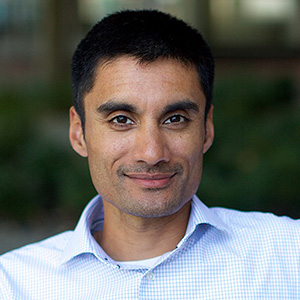
Jay F Sarthy, MD, PhD
Jay Sarthy, MD, PhD, is a principal investigator in the Ben Towne Center for Childhood Cancer Research.
Dr. Sarthy earned his PhD in molecular biosciences from the University of Kansas working with Dr. Peter Baumann, where his research focused on mechanisms of telomere protection and deprotection in human cells. He went to medical school at Northwestern University’s Feinberg School of Medicine. He completed a residency in pediatrics at Children’s Mercy Hospitals and Clinics, followed by a fellowship in pediatric hematology-oncology at Seattle Children’s Hospital/Fred Hutchinson Cancer Center/University of Washington, where he conducted postdoctoral research with Dr. Steven Henikoff.
He is an attending physician in Seattle Children’s Bone Marrow Transplantation unit. He has also continued his basic biology research at Seattle Children's, focusing on epigenetics of pediatric cancers and identifying less toxic pediatric cancer treatments.
In his spare time, Dr. Sarthy enjoys spending time with his family. He also enjoys hiking, skiing, kayaking and listening to classic country music.
-
Investigator, Ben Towne Center for Childhood Cancer Research and Assistant Director of Epigenetics